
In a bold and unusually direct intervention into U.S. affairs, three of the most senior American Catholic cardinals have issued a rare joint statement critiquing the moral direction of American foreign policy and urging national leaders to re-anchor decisions in ethical principles grounded in Catholic teaching.
The statement was released on January 19, 2026, and carries the signatures of Cardinal Blase J. Cupich, Archbishop of Chicago; Cardinal Robert McElroy, Archbishop of Washington; and Cardinal Joseph W. Tobin, Archbishop of Newark. It draws heavily on recent remarks by Pope Leo XIV — who in an address to the Vatican diplomatic corps on January 9 outlined a moral framework for international relations — and explicitly measures U.S. policy against that ethical standard.
What makes this intervention truly remarkable is both its content and its context: three high-ranking U.S. prelates publicly weighing in on matters of diplomacy, war, aid, and national moral purpose at a moment of heightened global tension and intense domestic debate about the United States’ role in the world.
What the Cardinals Said
The heart of the cardinals’ message is a simple but ambitious claim:
“U.S. foreign policy must be guided first and foremost by a moral compass rooted in human dignity and the common good, not narrow national interests or partisan divides.”
Invoking Pope Leo’s critique of modern diplomacy — particularly his concern that diplomacy based on force has too often replaced dialogue and consensus-building — the statement calls for a renewed commitment to peace, solidarity, and justice.
It underscores that peace cannot be pursued simply through weapons or coercive power, but must be built through dialogue and cooperation among nations.
The cardinals wrote that:
- The United States is engaged in “the most profound and searing debate about the moral foundation of America’s actions in the world since the end of the Cold War.”
- Events in places like Venezuela, Ukraine, and Greenland have raised deep questions about how military force, national sovereignty, and peace should be balanced in foreign policy.
- National interests “narrowly conceived” often neglect the dignity of human life and the moral imperative of global solidarity, thereby contributing to suffering and instability.
In their words, military action must be viewed as a last resort, not a normal instrument of statecraft — a direct challenge to longstanding debates over the role of American military power abroad.
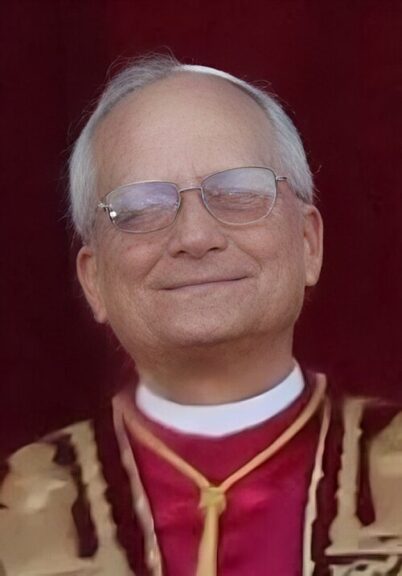
Photo: Edgar Beltrán / The Pillar
The statement also reflects core Catholic social teachings: that the protection of human life is foundational to all other human rights; that wealthy nations have a moral obligation to support international humanitarian aid; and that religious freedom and conscience rights deserve robust defense around the world.
Why This Matters in U.S. Politics Today
This intervention from Catholic leaders lands in a particularly charged political moment. Foreign policy is a key arena of debate — not just among policymakers in Washington, but among voters. Questions about U.S. involvement in global conflicts, alliances, humanitarian aid, and the ethics of military intervention shape public opinion and election narratives.
For decades, the Catholic Church in the United States has grappled with how best to influence public policy while maintaining its religious identity. Most statements from Catholic bishops or cardinals tend to focus on issues like abortion, healthcare, or immigration. But it is rare for the Church’s highest American prelates to collectively critique the moral underpinnings of national foreign policy on the world stage.
That rarity is part of what makes this statement noteworthy: it signals that these church leaders view the current trajectory of U.S. foreign policy as not only politically divisive, but morally inadequate.
As one analyst’s put it, this is an intervention by “the nation’s top Catholics” into the question of what America stands for — beyond power, beyond national interest, and beyond partisan politics.
The cardinals’ critique — while rooted in Catholic teaching — raises broader ethical questions shared by many outside the Church. What responsibility does a powerful nation like the United States have to uphold human dignity beyond its borders? How should moral values shape strategic decisions? And at what point do national ambitions conflict with universal principles of justice and peace?
These questions strike at the heart of a democratic society’s foreign policy debates. They are the kind of debates that shape electoral choices, impact international alliances, and determine how the nation is perceived abroad.

The Broader Conversation: Moral Voices in Public Life
Even for readers who are not Catholic, this moment invites reflection on the role of moral leadership in political discourse. Across the world, faith institutions, ethical thinkers, and civil society advocates are wrestling with similar dilemmas: how to reconcile national security, economic priorities, and humanitarian obligations in an increasingly interconnected — and often conflict-ridden — world.
In publicly urging a moral compass for U.S. foreign policy, these cardinals are not merely speaking to Catholic audiences. They are challenging the nation to widen the moral lens through which foreign policy is debated and decided. They are pushing for a vision of American engagement abroad that believes peace is not just the absence of war, but the presence of justice, human dignity, and shared human flourishing.
In doing so, they remind us that moral leadership — whether from faith voices, civic leaders, or engaged citizens — remains crucial to the health of a democratic society striving to do better, be better, and build a world where peace and justice are more than slogans — they are lived realities.