



When Homeland Security Secretary Kristi Noem compared antifa to the transnational criminal group MS-13, Hamas and the Islamic State group in October 2025, she equated a nonhierarchical, loosely organized movement of antifascist activists with some of the world’s most violent and organized militant groups.
“Antifa is just as dangerous,” she said.
It’s a sweeping claim that ignores crucial distinctions in ideology, organization and scope.
Comparing these groups is like comparing apples and bricks: They may both be organizations, but that’s where the vresemblance stops.
Noem’s statement echoed the logic of a September 2025 Trump administration executive order that designated antifa as a “domestic terrorist organization.”
The order directs all relevant federal agencies to investigate and dismantle any operations, including the funding sources, linked to antifa.
But there is no credible evidence from the FBI or the Department of Homeland Security that supports such a comparison.
Independent terrorism experts don’t see the similarities either.
Data shows that the movement can be confrontational and occasionally violent.
But antifa is neither a terrorist network nor a major source of organized lethal violence.
Antifa, as understood by scholars and law enforcement, is not an organization in any formal sense.
Antifa groups active in Houston during Hurricane Harvey in 2017 coordinated food, supplies and rescue support for affected residents.
It lacks membership rolls and leadership hierarchies.
It doesn’t have centralized funding.
As a scholar of social movements, I know that antifa is a decentralized movement animated by opposition to fascism and far-right extremism.
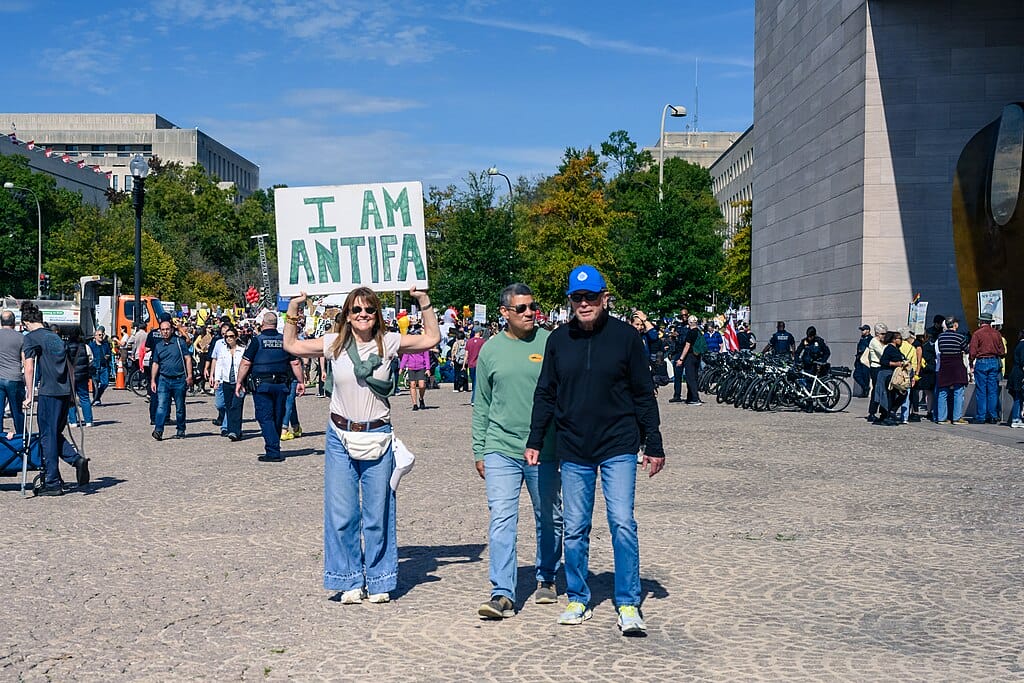
It’s an assortment of small groups that mobilize around specific protests or local issues.


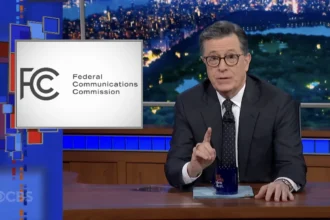
And its tactics range from peaceful counterdemonstrations to mutual aid projects.
For example, in Portland, Oregon, local antifa activists organized counterdemonstrations against far-right rallies in 2019.
Antifa groups active in Houston during Hurricane Harvey in 2017 coordinated food, supplies and rescue support for affected residents.
No evidence of terrorism
The FBI and DHS have classified certain anarchist or anti-fascist groups under the broad category of “domestic violent extremists.”
But neither agency nor the State Department has ever previously designated antifa as a terrorist organization.
The data on political violence reinforces this point.
A 2022 report by the Counter Extremism Project found that the overwhelming majority of deadly domestic terrorist incidents in the United States in recent years were linked to right-wing extremists.
These groups include white supremacists and anti-government militias that promote racist or authoritarian ideologies.
They reject democratic authority and often seek to provoke social chaos or civil conflict to achieve their goals.
Left-wing or anarchist-affiliated violence, including acts attributed to antifa-aligned people, accounts for only a small fraction of domestic extremist incidents and almost none of the fatalities.
Similarly, in 2021, the George Washington University Program on Extremism found that anarchist or anti-fascist attacks are typically localized, spontaneous and lacking coordination.
By contrast, the organizations Noem invoked – Hamas, the Islamic State group and MS-13 – share structural and operational characteristics that antifa lacks.
They operate across borders and are hierarchically organized. They are also capable of sustained military or paramilitary operations. They possess training pipelines, funding networks, propaganda infrastructure and territorial control. And they have orchestrated mass casualties such as the 2015 Paris attacks and the 2016 Brussels bombings.
In short, they are military or criminal organizations with strategic intent.
Noem’s claim that antifa is “just as dangerous” as these groups is not only empirically indefensible but rhetorically reckless.
Turning dissent into ‘terrorism’
So why make such a claim?
Noem’s statement fits squarely within the Trump administration’s broader political strategy that has sought to inflate the perceived threat of left-wing activism.
Casting antifa as a domestic terrorist equivalent of the Islamic State nation or Hamas serves several functions.
It stokes fear among conservative audiences by linking street protests and progressive dissent to global terror networks.
It also provides political cover for expanded domestic surveillance and harsher policing of protests.
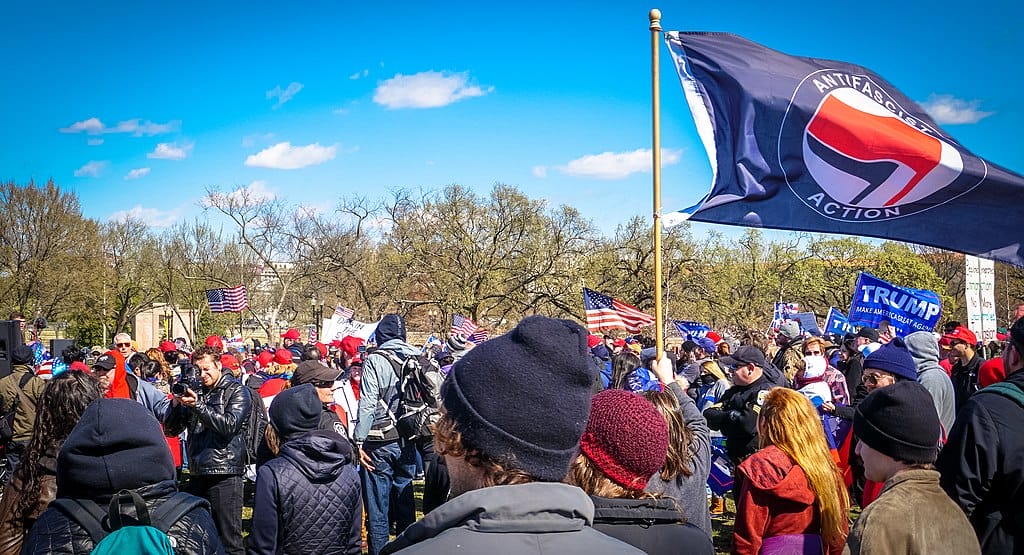
Additionally, it discredits protest movements critical of the right. In a polarized media environment, such rhetoric performs a symbolic purpose.
It divides the moral universe into heroes and enemies, order and chaos, patriots and radicals.
Noem’s comparison reflects a broader pattern in populist politics, where complex social movements are reduced to simple, threatening caricatures. In recent years, some Republican leaders have used antifa as a shorthand for all forms of left-wing unrest or criticism of authority.
Antifa’s decentralized structure makes it a convenient target for blame.
That’s because it lacks clear boundaries, leadership and accountability.
So any act by someone identifying with antifa can be framed as representing the whole movement, whether or not it does.
And by linking antifa to terrorist groups, Noem, the top anti-terror official in the country, turns a political talking point into a claim that appears to carry the weight of national security expertise.
The problem with this kind of rhetoric is not just that it’s inaccurate. Equating protest movements with terrorist organizations blurs important distinctions that allow democratic societies to tolerate dissent.
It also risks misdirecting attention and resources away from more serious threats — including organized, ideologically driven groups that remain the primary source of domestic terrorism in the U.S.
As I see it, Noem’s claim reveals less about antifa and more about the political uses of fear.
By invoking the language of terrorism to describe an anti-fascist movement, she taps into a potent emotional current in American politics: the desire for clear opponents, simple explanations and moral certainty in times of division.
But effective homeland security depends on evidence, not ideology. /sp
To equate street-level confrontation with organized terror is not only wrong — it undermines the credibility of the very institutions charged with protecting the public.