

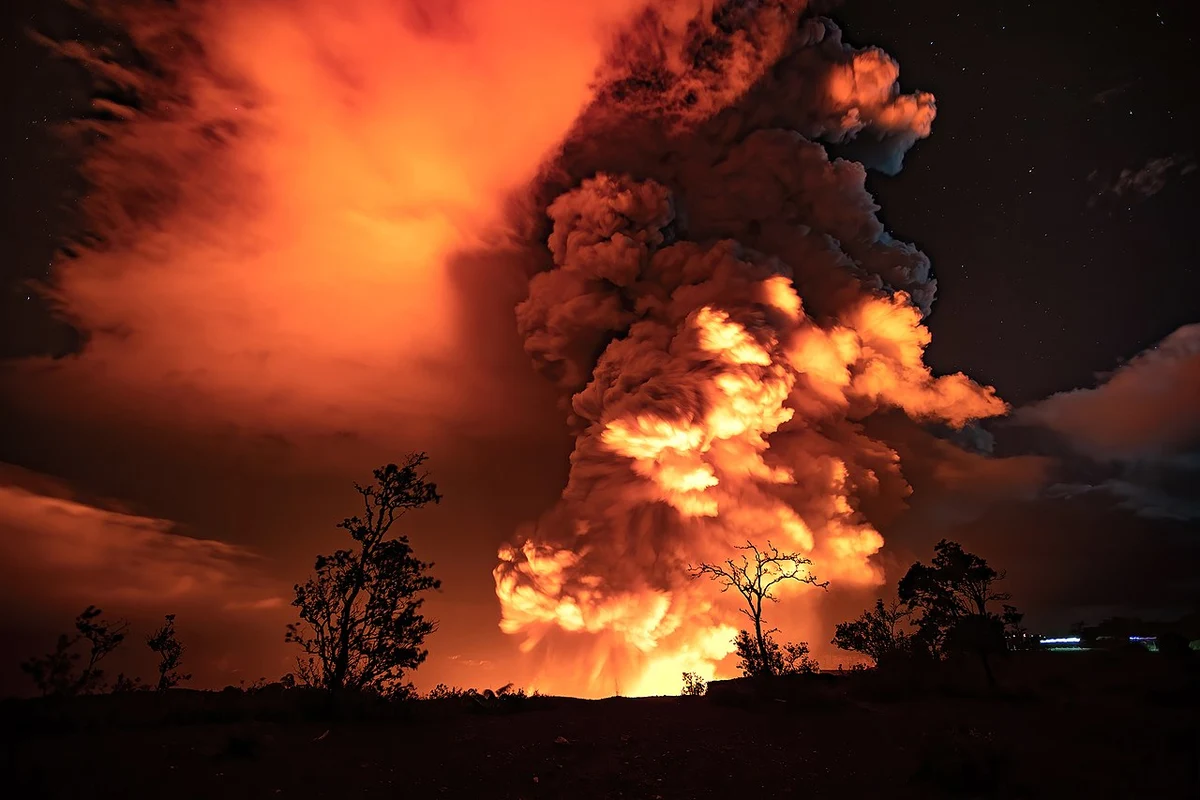
Hawaii’s Kilauea volcano roared back to life Tuesday with its most dramatic display in weeks, shooting twin columns of lava more than 1,300 feet into the air and blanketing nearby communities with volcanic debris.
The eruption forced the closure of a major highway, triggered evacuations at Hawaii Volcanoes National Park, and left residents across the Big Island cleaning up ash, pumice, and strands of volcanic glass known as Pele’s hair.
Episode 43: Nine Hours of Continuous Fountaining
Episode 43 of Kilauea’s ongoing eruption began at 9:17 a.m. local time on Tuesday, March 10, when seismic tremors doubled and ground tilt accelerated downward — telltale signs that magma was on the move.
Within minutes, lava began erupting from the north vent inside Halema’uma’u crater. The south vent followed just before 10 a.m.
By midday, the eruption had intensified dramatically. The south fountain reached 1,150 feet while the north vent climbed to 1,000 feet.
At their peak, both fountains exceeded 1,300 feet — taller than most skyscrapers and visible for miles. Lava flows covered roughly a third of the crater floor.
The episode lasted just over nine hours before ending abruptly at 6:21 p.m. HST, according to the U.S. Geological Survey’s Hawaiian Volcano Observatory (HVO).
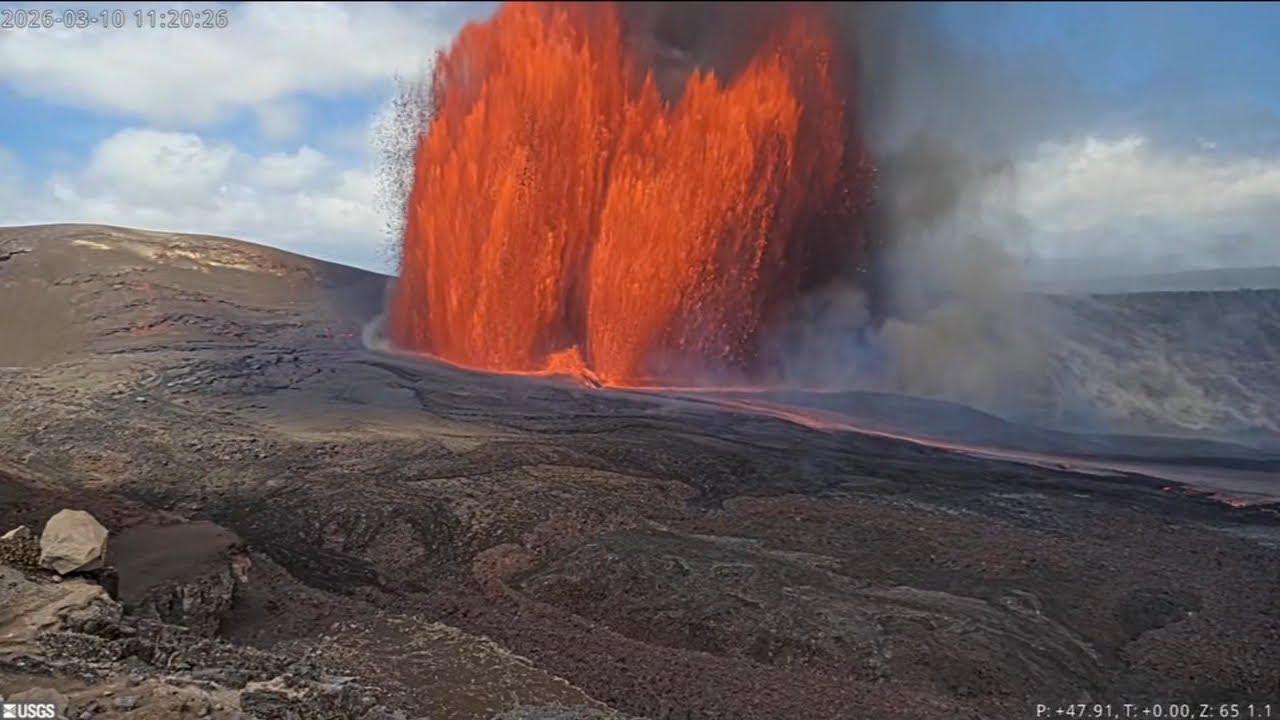
All eruptive activity remained within the national park’s boundaries and did not directly threaten homes or buildings. But while the lava itself stayed in the crater, the volcanic fallout from those towering fountains spread far and wide.
Falling Debris Forces Closures and Evacuations
The real danger wasn’t the lava — it was what came raining down from the sky. Volcanic tephra, a mix of ash, pumice, scoria, and glassy fragments, began falling within 30 minutes of the eruption’s start.
At overlooks inside the national park, the debris reached the size of footballs. The Uekahuna overlook recorded 4 to 7 inches of accumulated tephra, with 2-inch chunks beginning to fall by 10:20 a.m.

The Hawaiian Volcano Observatory raised the alert level to its highest designation — RED/WARNING — at 10:54 a.m., signaling an actively hazardous eruption with dangers both on the ground and in the air.
The National Weather Service followed with an ashfall warning, reporting the volcanic plume had climbed to an estimated 25,000 to 30,000 feet above sea level.
Highway 11, the main route circling the Big Island and the primary road to Hawaii Volcanoes National Park, was closed between mile markers 24 and 40 — a roughly 16-mile stretch — due to dangerous conditions. Football-sized chunks of rock were falling directly onto the roadway.
Park rangers evacuated visitors from the summit area. All trails and outdoor overlooks near the summit were shut down.
Related

Overnight guests at the Volcano House hotel and Kilauea Military Camp were allowed to return only with proof of reservations and identification, and were required to shelter in place once inside.
“We hiked all the way up and we were asked to leave because we were evacuating the park,” one visitor, Carol Marigan, told Hawaii News Now.
Communities Hit by Ash and Volcanic Glass
The eruption’s effects spread well beyond park boundaries. The light, variable winds at the summit meant volcanic material drifted unpredictably, impacting communities in multiple directions.
Volcano Village and Mauna Loa Estates, the communities closest to the eruption, saw tephra up to 3 inches in diameter.
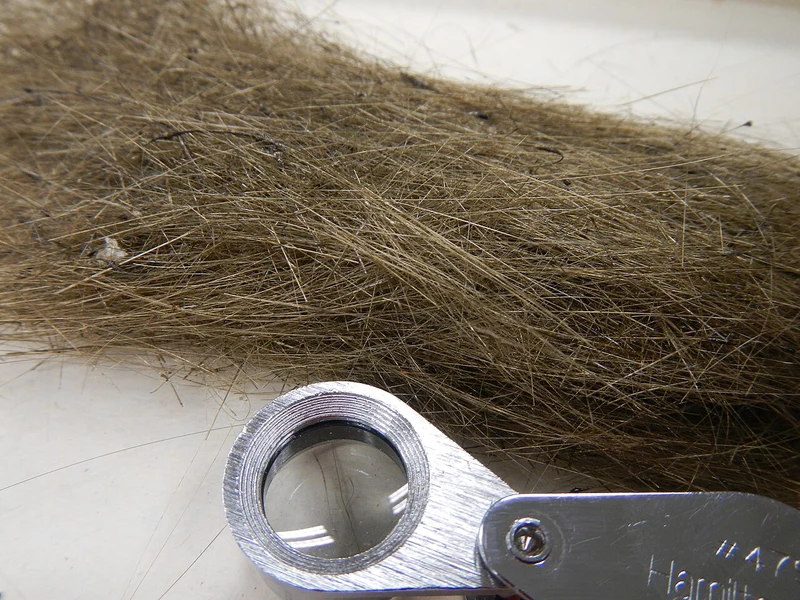
The Volcano Golf Course was hit particularly hard, blanketed by fragments several inches wide. Farther out, Royal Hawaiian Estates reported smaller tephra and Pele’s hair — thin, glassy strands of volcanic fiber that can irritate skin, eyes, and lungs.
As the day progressed, fine ash and Pele’s hair were reported as far away as Mountain View, Hilo, Hawaiian Paradise Park, and even the Hamakua Coast north of Hilo.
The volcanic plume turned the sun red near Volcano Village, an eerie visual reminder of the eruption’s scale.
Hawaii County Civil Defense opened an emergency shelter at the Ka’u District Gym in Pahala for anyone displaced by road closures or falling debris.
County officials also announced they would station workers at the Cooper Center in Volcano Village on Wednesday to help residents with questions and cleanup.
All three campuses of the Volcano School of Arts & Sciences closed for Wednesday to allow for tephra cleanup.
Public swimming pools in Hilo and the Pahoa Community Aquatic Center also shut down for cleaning after volcanic material fouled the water.
Health Risks and Cleanup Challenges
Volcanic tephra and ash pose real health threats, especially for children, pregnant individuals, and anyone with respiratory conditions.
County officials urged residents to seal windows and doors, cover air intakes and open water sources, protect electronics, and avoid driving unless absolutely necessary.
Cleaning tephra off rooftops requires extreme caution due to weight and instability.
The fragments can also clog water catchment systems, which are common in rural parts of the Big Island.
Officials warned residents to disconnect gutters feeding into water tanks until the area has been fully cleaned and the volcanic hazards have passed.
Even with the eruption paused, sulfur dioxide emissions remain elevated. The gas reacts in the atmosphere to create vog — volcanic air pollution — that can cause respiratory problems downwind.
HVO reports typical SO2 emissions of 1,000 to 1,500 tons per day during pauses between episodes.
This Won’t Be the Last One
Kilauea’s current eruption cycle began on December 23, 2024, and has now produced 43 episodes of lava fountaining from two vents in Halema’uma’u crater.
Most episodes last a day or less before the volcano goes quiet again for days or weeks.
Episode 42, which ended on February 15, lasted just under 10 hours and produced an estimated 15 million cubic yards of lava.
The USGS says the rapid rebound of ground tilt and strong glow from both vents after Episode 43 ended strongly indicate another eruption is coming. Preliminary models suggest Episode 44 is likely between late March and the first half of April.
Kilauea is one of the most active volcanoes on Earth. For residents of the Big Island, that means more eruptions, more cleanup, and more disruptions to daily life.
A newly installed webcam with an outdoor microphone — set up just last week to capture the sounds of the eruption — was knocked over by falling tephra less than two hours into Episode 43, a fitting metaphor for a community that keeps rebuilding in the shadow of an unpredictable giant.
In late February, a man died in a closed area on the east side of Kilauea’s caldera during a quiet period between eruptions, underscoring that the volcano remains dangerous even when it isn’t actively fountaining.
Last June, a 30-year-old visitor from Boston was rescued after falling 30 feet from a cliff while trying to get a closer look at the eruption.
For anyone planning to visit Hawaii Volcanoes National Park, checking the latest conditions before traveling isn’t optional — it’s essential.
The USGS Hawaiian Volcano Observatory publishes regular updates and livestreams the eruption on their YouTube channel.