

The Strait of Hormuz is effectively closed. Oil has blown past $100 a barrel. And the crisis is proving exactly what climate advocates have warned about for decades: as long as the global economy runs on fossil fuels, it runs on a fuse.
Two weeks into Operation Epic Fury, the U.S.-Israeli military campaign against Iran has produced what the International Energy Agency is now calling the largest supply disruption in the history of the global oil market.
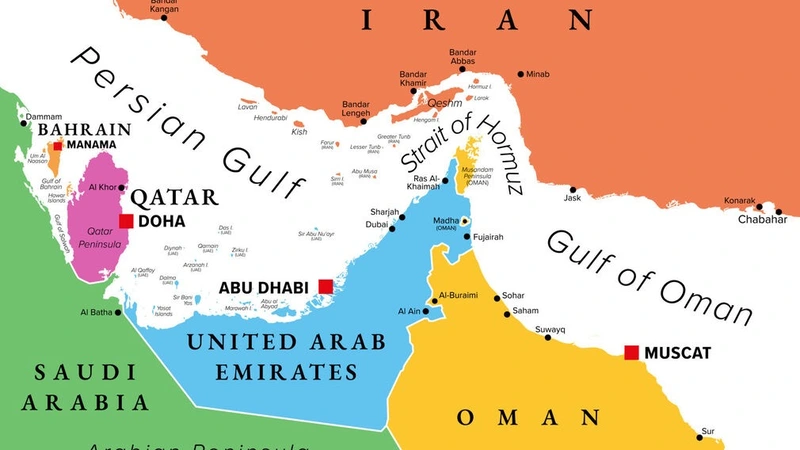
The Strait of Hormuz — a narrow waterway between Iran and Oman through which roughly 20 percent of the world’s oil supply normally passes — has been effectively shut down.
Oil has surged past $100 a barrel. Gulf nations are cutting production because they have nowhere to send their crude. And the global economy is staring down an energy crisis that could push major oil-importing nations into recession.
This is not a theoretical exercise in geopolitical risk.
This is happening right now, and it is proving — in real time — exactly what environmental advocates and energy analysts have warned about for years: as long as the world’s strategic decisions are chained to fossil fuel supply chains, climate goals and economic stability alike remain hostage to the next military escalation.
How We Got Here
When the United States and Israel launched coordinated strikes against Iran on February 28, the immediate geopolitical consequences were obvious.
What wasn’t immediately apparent — but arguably more consequential for billions of people worldwide — was how rapidly the conflict would metastasize into an energy crisis.
Iran holds roughly 12 percent of the world’s proven oil reserves and was producing about 3.4 million barrels of crude per day in January.
But Iran’s real leverage was never its own output. It was always about geography.
The Strait of Hormuz carries approximately 20 million barrels of oil per day — connecting the Persian Gulf to global markets and representing the single most critical energy chokepoint on earth.
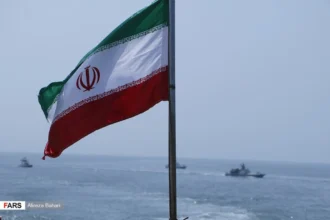
Iran’s Islamic Revolutionary Guard Corps wasted no time weaponizing that geography. Within days of the strikes, the IRGC declared the strait closed, warning that any vessel linked to the U.S., Israel, or their allies would be considered a legitimate target.
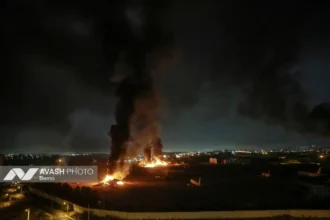
At least five tankers have been damaged. Three crew members from a Thai cargo ship are still missing after their vessel was set ablaze. Over 150 ships are anchored outside the strait, waiting.
The only vessels still transiting the waterway in any meaningful numbers are flying Iranian and Chinese flags.
The Numbers Are Staggering
The scale of the disruption defies comparison to any previous energy crisis. According to the IEA’s March market report, crude and oil product flows through the Strait of Hormuz have plunged from around 20 million barrels per day to what the agency described as “a trickle.”
Gulf countries — Saudi Arabia, the UAE, Kuwait, and Iraq — have been forced to cut total oil production by at least 10 million barrels per day, not because of damage to their infrastructure but because they have run out of storage capacity and viable export routes.
Saudi Arabia has begun diverting some oil through its East-West Pipeline to the Red Sea port of Yanbu, and the UAE is routing shipments through the port of Fujairah on the Arabian Sea.
But these alternatives cannot come close to replacing the volumes that normally flow through Hormuz. The deficit is roughly 12 million barrels per day — and the Red Sea route carries its own risks, given the ongoing Houthi threat.



Brent crude, which was in the low $70s before the war began, has been on a violent roller coaster. It briefly touched nearly $120 a barrel before settling back. As of this week, it has surged above $100 again after Iran’s new supreme leader, Mojtaba Khamenei, pledged to maintain the closure indefinitely.
The IRGC has warned that oil could hit $200 a barrel.
In response, the IEA’s 32 member countries unanimously agreed on March 11 to release 400 million barrels from emergency reserves — the largest coordinated release in the agency’s history.
But the agency itself acknowledged this was only a stopgap. The real question is how long the strait stays closed, and nobody has an answer.
China’s Exposed Underbelly
One of the most underappreciated dimensions of this energy crisis is what it reveals about China’s energy vulnerability.
Over the past decade, China became the dominant buyer of Iranian crude, purchasing nearly 90 percent of Iran’s oil exports by 2023.
Much of this oil was purchased at steep discounts by independent Chinese refineries — so-called “teapots” — concentrated in Shandong province.
That pipeline has now been severed. And the implications extend far beyond the loss of cheap Iranian barrels. China receives 45 to 50 percent of its total oil imports through the Strait of Hormuz.
With the waterway shut down, Beijing faces the prospect of scrambling for alternative suppliers at dramatically higher prices, drawing down strategic reserves that represent only a few months of supply, and absorbing inflationary pressures that could ripple through its already fragile economic recovery.
The irony is brutal: China’s strategy of quietly building an energy relationship with Iran while avoiding overt political alignment in the region has left it acutely exposed to a war it had no hand in starting.
The Real Lesson: Fossil Fuel Dependence Is a National Security Threat
For Washington, the crisis carries its own contradictions. The Trump administration came into office championing “energy dominance” — a strategy built on deregulating fossil fuel production, rolling back renewable energy subsidies, and freezing previously approved wind and solar projects.
The underlying premise was that American energy independence, achieved through maximizing oil and gas output, would insulate the U.S. from exactly this kind of disruption.
That premise is being tested and found wanting. While the U.S. is technically a net energy producer and is no longer directly dependent on Middle Eastern oil, it is not immune to a global price shock of this magnitude.
Goldman Sachs has raised its probability of a U.S. recession this year to 25 percent.
Oxford Economics has modeled a scenario in which oil averages $140 a barrel for two months — a level it calls a “breaking point” that would push the eurozone, the U.K., and Japan into contraction and bring the U.S. economy to a standstill.
And that is the fundamental point that this energy crisis makes unavoidable: energy security built on fossil fuels is an illusion.
It doesn’t matter how much oil you produce domestically if the global price is set by a 21-mile-wide waterway that a single adversary can shut down.
It doesn’t matter how many drilling permits you approve if your allies’ economies collapse because they can’t get oil from the Gulf.
The interconnectedness of the global fossil fuel market means that no country, no matter how much it produces, is truly independent.
The alternative — a diversified energy system built on renewables, battery storage, and electrified transportation — would not eliminate geopolitical risk. But it would fundamentally reduce the world’s exposure to the kind of chokepoint vulnerability that is currently threatening to crash the global economy.
Every solar panel installed, every electric vehicle on the road, every wind turbine spinning is a barrel of oil that doesn’t need to transit the Strait of Hormuz.
The Clock Is Ticking
The U.S. Energy Secretary has said Washington is “not ready” to provide Navy escorts through the strait but suggested such operations could begin by the end of March.
Trump has encouraged ships to keep transiting the waterway — a statement that is functionally meaningless when insurance companies have withdrawn coverage and Iran’s IRGC has promised to set any vessel ablaze that attempts passage.
Meanwhile, the 400 million barrels released from emergency reserves represent roughly 20 days of the disrupted supply. If the strait remains closed for weeks or months — a scenario that grows more plausible with each passing day — those reserves will be exhausted, and the world will face an energy crisis with no modern precedent.
Qatar’s energy minister warned last week that if the war continues, Gulf producers may be forced to halt exports entirely and declare force majeure on their contracts. His exact words were chilling: this will bring down economies of the world.
He may not be wrong. And the tragic irony is that every dollar spent on this war, every barrel of oil weaponized, every tanker set ablaze is a reminder that the U.S. had a path toward energy security that didn’t run through the Strait of Hormuz. President Biden set us on that path. Donald trump came into office and chose to leave the path.