

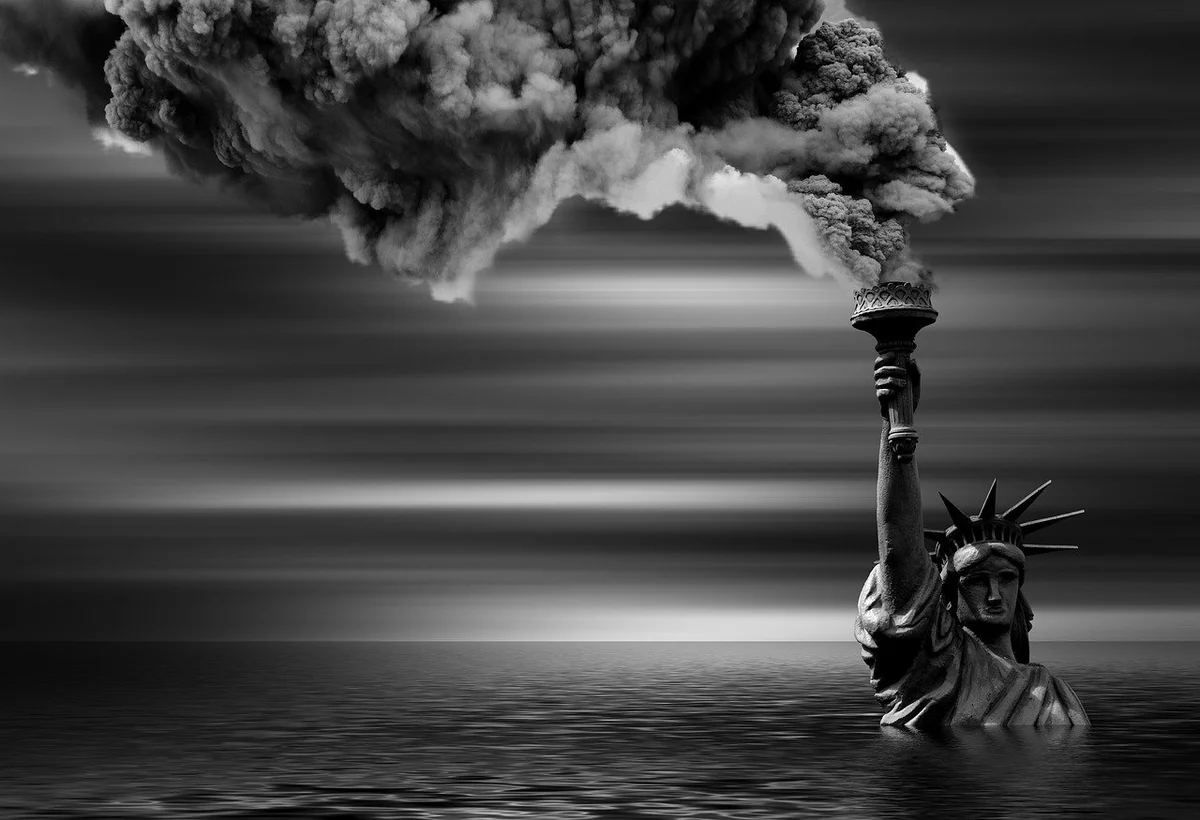
It’s hard to maintain composure in a conversation with someone who thinks thermometers have a political agenda. Climate change denialism is now government policy. Stock up on eye drops, because we’re about to do a lot of eye rolling.
Climate change denialists believe a whole spectrum of misinformation, from “the planet isn’t warming” all the way to “okay it’s warming but it’s not our fault” to “okay it’s our fault but the solutions sound expensive.”
It’s like a buffet of bad takes, and everyone’s going back for seconds.
Think of the climate crisis as a house fire. Climate change denialists are the people standing in the front yard arguing about whether fire is real while the roof collapses behind them.
Instead of accepting the overwhelming evidence that human activity is cooking the planet, they dance around the facts armed with conspiracy theories and pseudoscience — the intellectual equivalent of bringing a squirt gun to a five-alarm blaze.
Key Points
- Climate change denialism is the rejection of the scientific consensus that climate change is real and primarily caused by human activity.
- People may deny climate change because reality is inconvenient, their political identity depends on it, or someone is paying them to.
- Common myths include climate change being “just a natural cycle,” cold weather disproving global warming, and climate scientists somehow getting rich off studying ice cores.
- Combating denialism requires education, transparency in science, and the patience of a kindergarten teacher on a Friday afternoon.
Defining the Terms
At its core, climate change denialism isn’t just a rejection of facts — it’s a committed, enthusiastic refusal to engage with reality. It runs on a cocktail of misinformation, cherry-picked data, and the unshakable confidence of someone who got a C- in eighth-grade earth science and has been riding that credential ever since.
Denialists love to warp scientific data to fit their narrative. They’ll point to weather fluctuations and call them a “cyclical phenomenon” rather than symptoms of a warming planet. They’ll see snow in January and declare global warming debunked, apparently not understanding that “climate” and “weather” are different words with different meanings.
We checked. They are, in fact, in the dictionary separately.
The Cast of Characters: Who Are the Denialists?
The cast of this tragicomedy includes politicians, lobbyists, and a surprising number of everyday people who’d rather binge a Netflix sci-fi series than crack open a peer-reviewed journal — which, fair, but the planet is still on fire.
Politicians exploit denialism like it’s a renewable resource (ironic, since they hate those). They align themselves with fossil fuel interests or constituents who find the reality of climate change inconvenient, and they dodge facts with such grace they deserve their own award show. Let’s call it The Golden Denial Awards.

Lobbyists, meanwhile, represent the corporations that profit from fossil fuels. They fund campaigns promoting climate skepticism — not because the science supports them, but because their quarterly earnings depend on you not asking questions.
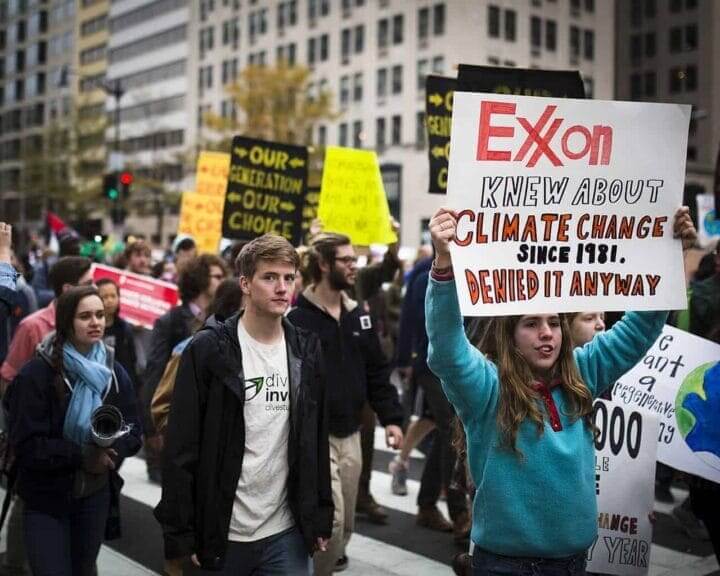
Together, this ensemble forms a bizarre theater where fact-checking is booed off stage and science is treated like a heckler. Remember when ExxonMobil was caught hiding data from its own scientists showing the company was actively damaging the planet? That’s not a conspiracy theory. That actually happened.
Get this: scientists first warned the U.S. President about the effects of burning fossil fuels on the planet — in 1965. That’s sixty years of warnings. Sixty. If climate change were a person, it would be eligible for retirement.
Instead of heeding those warnings, we’ve spent decades watching the consequences pile up: extreme weather events increasing in frequency, worsening floods and wildfires, unprecedented hurricanes, heat waves, and freezing temperatures in places that had never seen them.
When a snowstorm with rare freezing temperatures hit Texas in 2021, the state’s electric grid collapsed and people froze to death in their homes. The government’s National Centers for Environmental Information calls it “The Great Texas Freeze,” which sounds way too dignified for a completely preventable catastrophe.
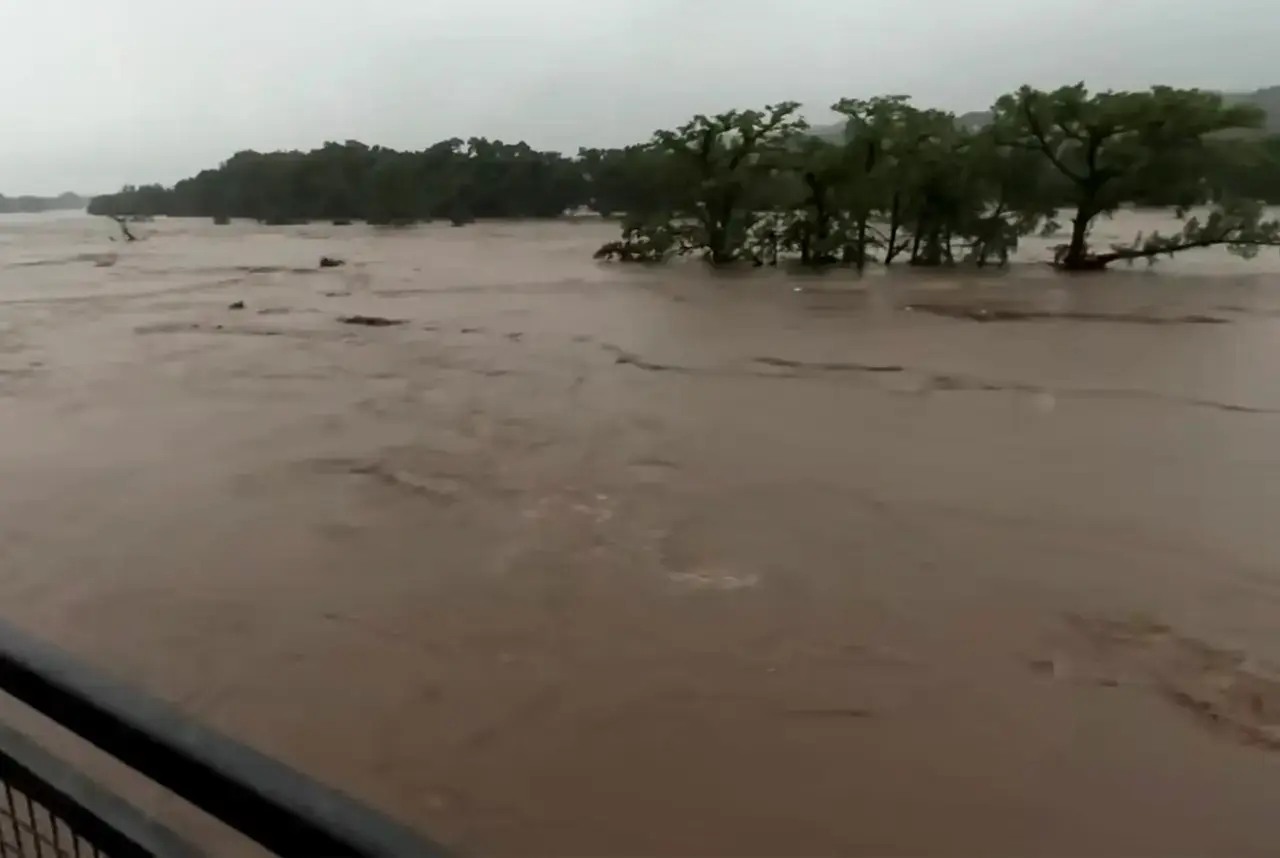
Texas was devastated by flash flooding in Kerr County in 2025 that killed over 100 people.
The Role of Disinformation and Lies in Climate Change Denialism
In the age of the internet, misinformation spreads faster than actual wildfires — which is saying something, because actual wildfires are spreading pretty fast these days. Climate change denialism thrives in this environment, creating echo chambers where falsehoods bounce around until they feel true.
The more ridiculous the claim, the more attention it gets, especially on social media. Meanwhile, the truth — polite, well-sourced, footnoted — gets scrolled past in two seconds flat.
Fake news goes unchallenged and becomes permanent furniture in public discussions. One viral post triggers a chain reaction of denialist nonsense spreading faster than you can say “carbon footprint.” (Calculate your personal carbon footprint using our calculator)
People share articles without reading past the headline, making themselves unwitting cast members in this disaster movie.
Tip: Always read (or at least skim) an article before you share it on social media. Check the source. Check the information. Otherwise, congratulations — you’re part of the misinformation problem.
Social media platforms like Facebook and X have become megaphones for climate denialism. They let users share debunked garbage with the click of a button, spreading disinformation faster than a cat video goes viral — and with about as much scientific rigor.

The algorithms don’t care about accuracy. They care about engagement. Sensational, misleading posts get more traction than carefully researched articles.
This means scientifically accurate information has become a niche product, while nonsense dominates the mainstream. Welcome to the marketplace of bad ideas.
Project 2025: The Anti-Climate Crusade
Enter Project 2025 — a name that sounds like a dystopian movie because, essentially, it is one.
This initiative, driven by a coalition of conservative think tanks, aims to roll back environmental protections and ramp up fossil fuel development. Think of them as a group of supervillains plotting a heist — except instead of stealing diamonds, they’re stealing a livable planet.
The Heritage Foundation, the masterminds behind Project 2025, insist climate change is a hoax dreamed up by progressives to strangle the economy with regulation.
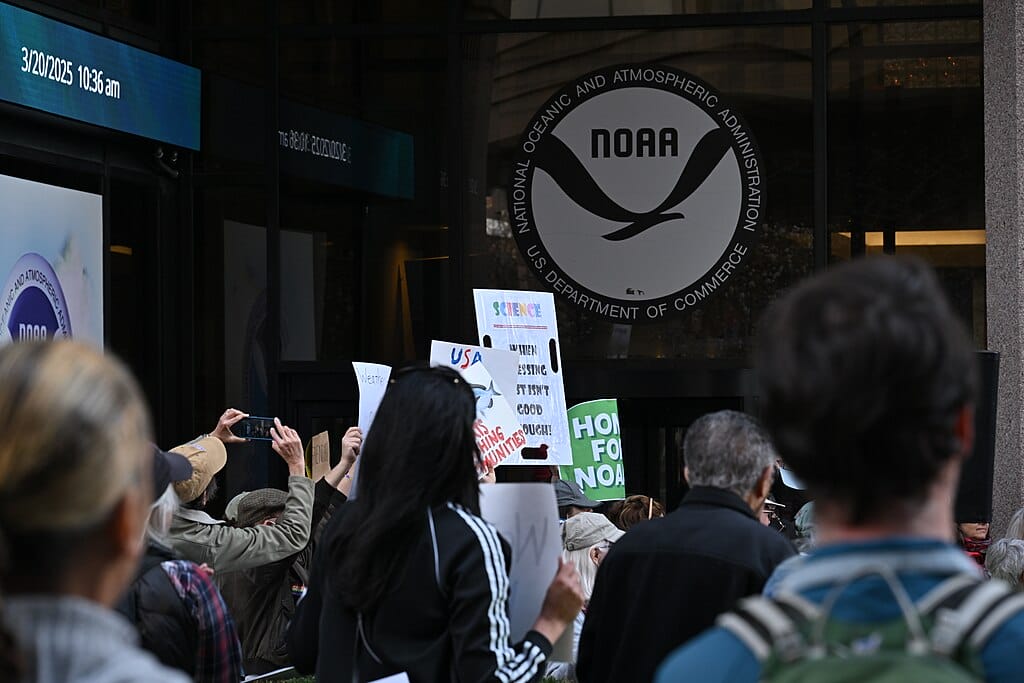
Their brilliant plan includes gutting NOAA — the National Oceanic and Atmospheric Administration — the agency responsible for tracking weather patterns and, you know, warning people when a hurricane is about to rearrange their zip code.
Heritage wants to give NOAA the ol’ “bye, Felicia” because they think that’s where all the climate “lies” originate.
Just to be clear: NOAA reports the weather. They don’t make the laws. That’s Congress and the EPA. Blaming NOAA for climate regulations is like blaming the thermometer for your fever.
Project 2025’s agenda also includes promoting fossil fuel investments as the road to prosperity — a classic case of choosing next quarter’s profits over next generation’s survival.
They frame environmental protections as government overreach and individual liberty violations, painting the choice as “economic freedom vs. environmental responsibility.”
They conveniently ignore that unchecked climate change will eventually destroy the economy too. But hey, at least shareholders had a good quarter.
The Consequences of Ignorance
The consequences of climate change denialism are as stark as they are absurd. When facts take a backseat, the fallout is catastrophic — affecting weather patterns, global economies, and the millions of people who didn’t sign up for this.
Natural disasters are happening more often and hitting harder. Floods, wildfires, and heatwaves are wrecking communities, and the costs of rebuilding keep climbing. People struggle to recover, budgets collapse, and the denialists shrug it all off.
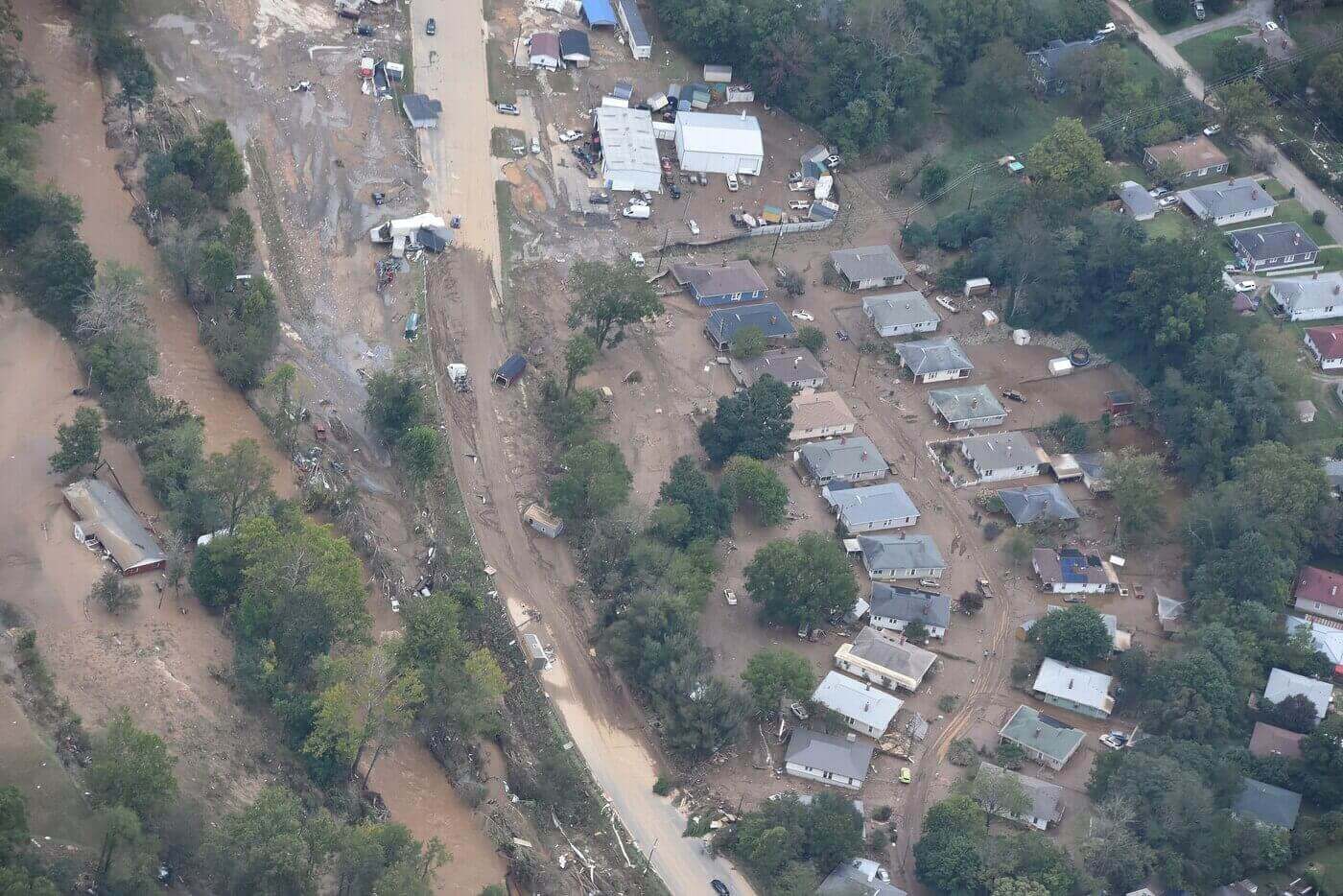
Speaking of shrugging things off: remember the hurricane that devastated North Carolina? People living in red states got a front-row seat to what it’s like to lose everything during a natural disaster under a president who responds to crises with conspiracy theories instead of aid.
Trump spread lies about FEMA during the disaster, which led to FEMA employees — who were there to help — being threatened by armed locals. Conspiracy theories spread about FEMA “coming to steal your house.” The whole thing would be hilarious if it weren’t so dangerous.
The real punchline? It was 2026 when the residents of North Carolina finally received disaster aid for Hurricane Helene.
Contrast that with President Biden, who sat next to Ron DeSantis when an apartment building collapsed in Florida, asking what the state needed.
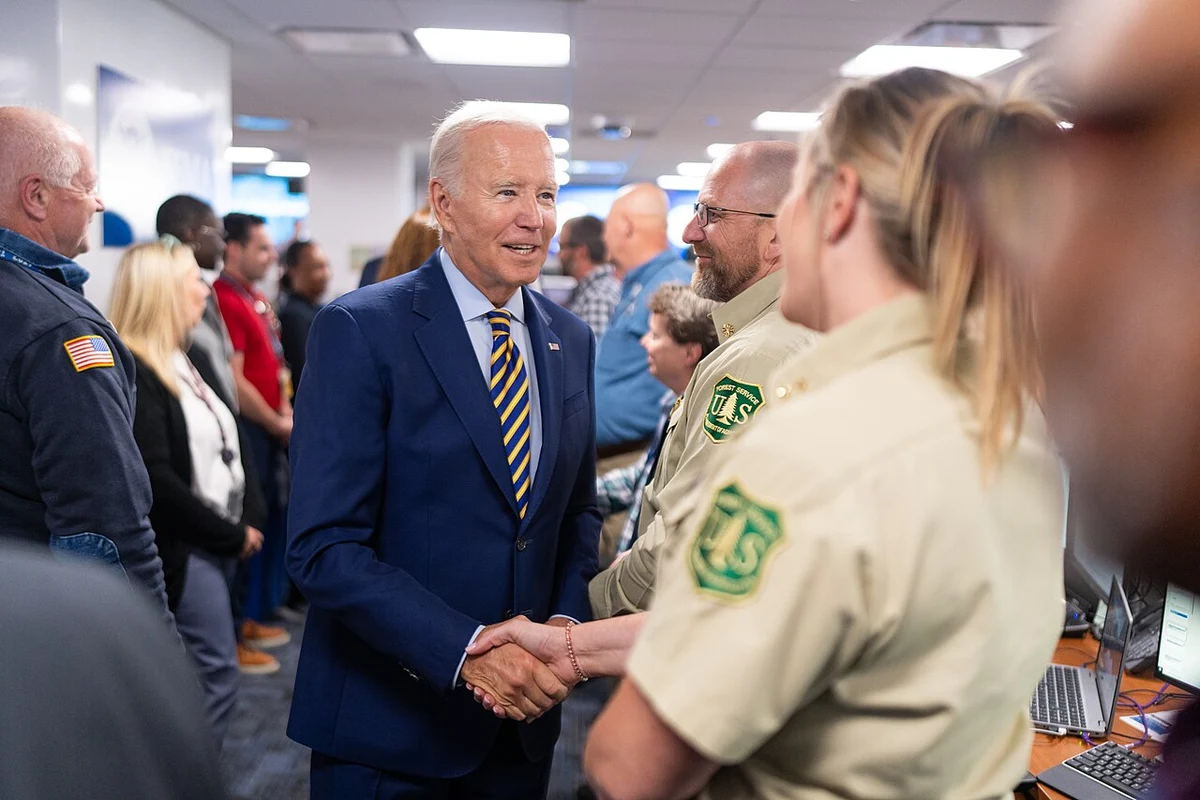
After the devastating wildfires in Hawaii, Biden was on calls with governors immediately offering federal assistance. Whether he visited in person or not, the help was coming.
Then you have Trump, a man who decides whether a state qualifies for disaster relief based on who its governor is and how many people there voted for him.
So, to summarize: Trump is terrible at doing anything about climate change, and he’s terrible at dealing with the consequences of doing nothing about it. A real two-for-one deal in incompetence.
Beyond the economics, the human cost is unacceptable. Millions face displacement, health risks, and food insecurity as a direct result of climate change.
When leaders deny the science, they abandon the people they’re supposed to protect. The irony is rich enough to be taxed: denialists laugh off climate change as a hoax while the consequences of their ignorance pile up like unpaid bills.
The Hoax Talking Point: A Comedy Routine
The crown jewel of climate denialism is the claim that the climate crisis is a hoax. Denialists chant this like a mantra, as if repetition is a substitute for evidence. It’s the rhetorical equivalent of closing your eyes and insisting the room is dark.
Debunking this claim is like explaining to someone why a joke isn’t funny — you can do it, but it shouldn’t be necessary. Thousands of peer-reviewed studies support the reality of climate change.
Organizations like NASA and the IPCC have mountains of evidence. This isn’t a conspiracy. It’s science. But the denialists persist, using this claim to derail any serious conversation.
Why do people still buy it? Partly psychology. Accepting the reality of climate change is overwhelming, and denial is a convenient off-ramp. It’s easier to laugh at the crisis than to sit with the implications.
The “hoax” narrative provides a cozy escape hatch — a way to dodge the responsibility that comes with knowing the truth. It’s a coping mechanism, just not a particularly helpful one for the rest of the species.
The Funniest Myths About Climate Change
Climate change denialism comes loaded with myths so absurd they’d be comedy gold if the stakes weren’t existential. These greatest hits serve as the backbone of denialist arguments, letting people dismiss mountains of evidence with a smirk and a shrug.
Top Ten Laugh-Out-Loud Myths
- Climate change is just a natural cycle — like the seasons, but with more category 5 hurricanes.
- It’s cold outside, so global warming is fake — congratulations, you’ve confused a thermometer with a climate model.
- The sun is just getting hotter — sure, and your house fire was caused by the sun too.
- Climate scientists are in it for the money — ah yes, the famously lucrative career of studying ice cores in Antarctica.
- Carbon dioxide is good for plants — too much of anything is bad. That includes CO2 and this argument.
- The Earth can heal itself — much like a teenager’s scraped knee, except the teenager in this analogy is actively pouring salt in the wound.
- Climate models are unreliable — so your plan is to ignore all predictions and just wing it? Bold strategy.
- We’ve had ice ages before — and humans almost didn’t survive those, so maybe that’s not the reassuring point you think it is.
- It’s not going to affect me — the unofficial motto of everyone who gets affected.
- All the climate data is fabricated — because thousands of scientists across dozens of countries coordinated the world’s most elaborate prank for grant money.
These myths aren’t just punchlines — they’re actively pushed in media and political discourse. Each one becomes a security blanket for people who’d rather not think about what’s happening to the planet.
The irony of clinging to these absurdities while the world literally heats up around them is almost unbearable.
The persistence of these myths is a testament to how effective denialist messaging has become.
They thrive in an environment where misinformation travels at the speed of Wi-Fi and corrections travel at the speed of a congressional subcommittee.
Each myth has been debunked countless times, yet they keep evolving — like a virus, which is another thing denialists tend to have opinions about.
Climate change denialism is a tragicomedy packed with absurd characters, laughable myths, and devastating consequences. It may offer temporary comfort to those who refuse to face reality, but the stakes are too high for denial to work as a long-term strategy.
The world is facing unprecedented challenges, and ignoring the science is like laughing in the face of a storm — satisfying for about three seconds until the wind picks you up.
FAQs
What is climate change denialism?
Climate change denialism is the rejection of the scientific consensus that climate change is real and primarily caused by human activity. Denialists rely on misinformation, conspiracy theories, and a remarkable ability to ignore thermometers.
Why do some people deny climate change?
Reasons include psychological comfort, political identity, financial interests, and the universal human talent for avoiding uncomfortable truths until they become unavoidable catastrophes.
What are some common myths about climate change?
Classics include “it’s just a natural cycle,” “cold weather disproves global warming,” and “climate scientists are getting rich,” which is the funniest myth of all if you’ve ever seen a scientist’s salary.
What are the consequences of climate change denialism?
Worsening environmental disasters, economic instability, human suffering, and a growing list of politicians who will one day have to explain their voting records to their grandchildren.
How can we combat climate change denialism?
Education, scientific transparency, critical thinking, and resisting the urge to scream into a pillow every time someone shares a “global warming is fake because it snowed” post.