


It’s March, and parts of California just hit 108 degrees.
That’s not a typo. While spring technically started this week, the western United States is living through what climate scientists are calling one of the most extreme weather events in modern American history — a California heat wave so far outside the bounds of normal that researchers say it simply could not have happened without decades of fossil fuel pollution warming the planet.
A massive ridge of high pressure — what meteorologists call a heat dome — has been parked over the American West since mid-March, trapping hot air and sending temperatures soaring 20 to 30 degrees above average across California, Arizona, Nevada, and beyond.
The numbers are staggering. Both Indio and Thermal, California, hit 108°F on Thursday, tying the all-time record for the hottest March temperature ever recorded in the United States.
A weather station near Martinez Lake, Arizona, posted 110°F the same day, though that reading still requires official verification from the National Centers for Environment Information.
Phoenix recorded its earliest-ever triple-digit day on Wednesday at 102°F, then climbed to 105°F Thursday. San Francisco — a city that averages just seven days per year at or above 84°F — hit 86°F Tuesday, setting a new March record.
It was also the first time in the city’s history that it recorded four straight days at or above 84 degrees during winter. Riverside, California, reached 101°F. Records fell in Anaheim, Sacramento, San Diego, and dozens of other cities.
Around 38 million people across Southern California and the desert Southwest are currently under heat alerts. The heat dome shows no signs of retreating. No relief is expected through at least next week.

The Science Is Clear: This Is Climate Change
On Friday, the international research consortium World Weather Attribution published a rapid analysis that left no room for ambiguity. Scientists compared this week’s temperatures to weather observations from the region dating back to 1900 and ran computer models simulating a world without human-caused warming.
Their conclusion: the March 2026 heat wave would have been “virtually impossible” in a world without climate change driven by burning fossil fuels.
The study estimated that global warming added between 4.7°F and 7.2°F to the temperatures people are experiencing right now. In a world without climate change, these conditions wouldn’t be merely unlikely — they would essentially never happen.
Even with today’s 1.3°C of warming, an event like this has an estimated return period of roughly 500 years. It is, by every measure, extraordinary.

Friederike Otto, a climate scientist at Imperial College London who coordinates World Weather Attribution, put it plainly: climate change is the reason extreme events keep intensifying and records keep breaking.
More than a dozen scientists and disaster experts surveyed by the Associated Press placed this heat wave in the same ultra-extreme category as the 2021 Pacific Northwest heat dome — which killed hundreds when temperatures reached 120°F in Oregon and Washington — along with the 2022 Pakistan floods and hurricanes Helene, Harvey, and Sandy.
The U.S. is now breaking 77% more hot weather records than it did in the 1970s. The area of the country affected by extreme weather has doubled in the past five years compared to 20 years ago.
The Danger of Heat That Arrives Too Early
What makes this event especially dangerous isn’t just the raw temperatures. It’s the timing.
In mid-summer, people in California and Arizona are physically acclimated to the heat. Their bodies have adjusted. They know the routine — hydrate, seek shade, stay indoors during the worst hours. In March, none of that preparation has happened.
Professor John Abatzoglou, a climatologist at UC Merced, warned that because people aren’t yet acclimated, the health risks from this heat wave are far greater than the same temperatures would pose in July or August.
The Weather Prediction Center echoed this, noting that the early and prolonged nature of the event particularly threatens sensitive populations and people without access to effective cooling.
Extreme heat is already the deadliest form of severe weather in the United States, killing more than twice as many people per year on average as hurricanes and tornadoes combined. An early-season event like this one catches communities off guard. Cooling centers may not be fully operational. Public health outreach campaigns designed for summer haven’t kicked in yet.
A CalMatters investigation published this week found that despite hundreds of millions of dollars California has spent on heat preparedness plans, the state’s most vulnerable residents — the elderly, the unhoused, outdoor workers, people without air conditioning — remain largely on their own during these events.
The state’s response still treats extreme heat as an emergency rather than the ongoing public health threat it has become.
California’s occupational safety agency, Cal/OSHA, issued warnings for employers to provide shade, water, and rest breaks to outdoor workers — people who, as the agency acknowledged, are not yet acclimatized and face elevated risk.
Water, Fire, and Agriculture: The Cascade of Consequences
The heat dome isn’t just a public health crisis. It’s accelerating a cascade of environmental damage.
California’s snowpack — the mountain snow that melts slowly through spring and summer to supply much of the state’s water — has been melting at a rate of about 1% per day since early March, according to the state Department of Water Resources. Normally, the snowpack builds through spring.
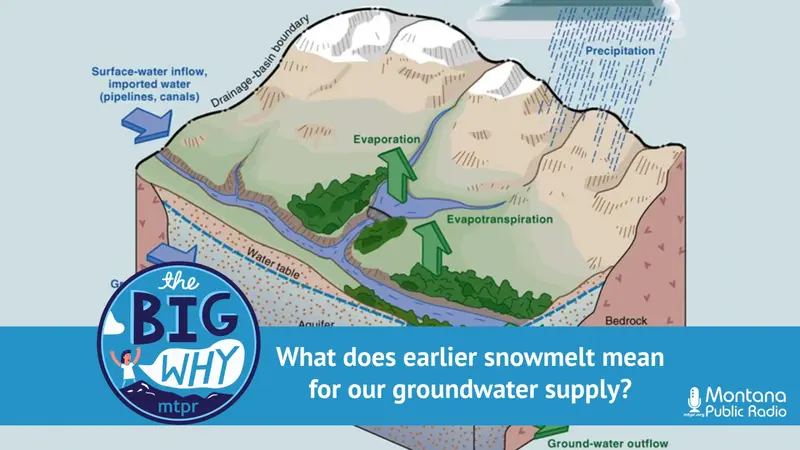
This heat wave is flipping that timeline, potentially melting the Sierra Nevada snowpack completely about five weeks earlier than usual.
Colorado’s snowpack is already at its lowest level since 1981 after the warmest winter on record across the western and central United States.
Climate scientist Daniel Swain of UCLA warned that the combination of early snowmelt and historic heat could create unprecedented problems for the Colorado River water supply, which millions of people depend on.
Wildfire season, which already stretches longer every year, is being pushed forward. Abatzoglou noted that while vegetation isn’t yet dry enough to carry large fires, this heat wave is rapidly accelerating the drying process.
The greatest immediate fire risk lies along the Rocky Mountain Front Range, where severe drought combines with warm, dry winds to create potentially dangerous conditions.
Agriculture is taking a hit, too. UC Merced researcher Lauren Parker warned that orchard crops still in bloom are vulnerable to heat damage. High temperatures interfere with pollen quality and pollinator activity, reducing fruit production during a critical window of the growing season.
A Pattern That Will Only Get Worse
Looking further ahead, climatologist Daniel Swain flagged increasingly strong signals of an El Niño developing in the tropical Pacific — one that could become a major climate driver through 2026 and 2027.
Warmer-than-normal ocean temperatures along the California coast may weaken the usual summer marine layer, making coastal areas feel unusually muggy and warm. The same conditions could fuel stronger Eastern Pacific hurricane activity this summer and fall.
The World Weather Attribution study noted that climate models actually underestimate how quickly extreme heat events have intensified in this region. The observed trends are outpacing what even the models predicted.
The gap between what scientists projected and what is actually happening should alarm anyone paying attention.
This is not an isolated event. It is the pattern. A heat dome like this in March was once unthinkable. Now it’s here, and the conditions that created it — a warming atmosphere fueled by fossil fuel emissions — aren’t going away. They’re getting worse.
For 38 million people sweating through triple-digit March temperatures, the abstractions of climate policy have become concrete.
The heat is real. The records are falling. And the science says none of this had to be this bad.