
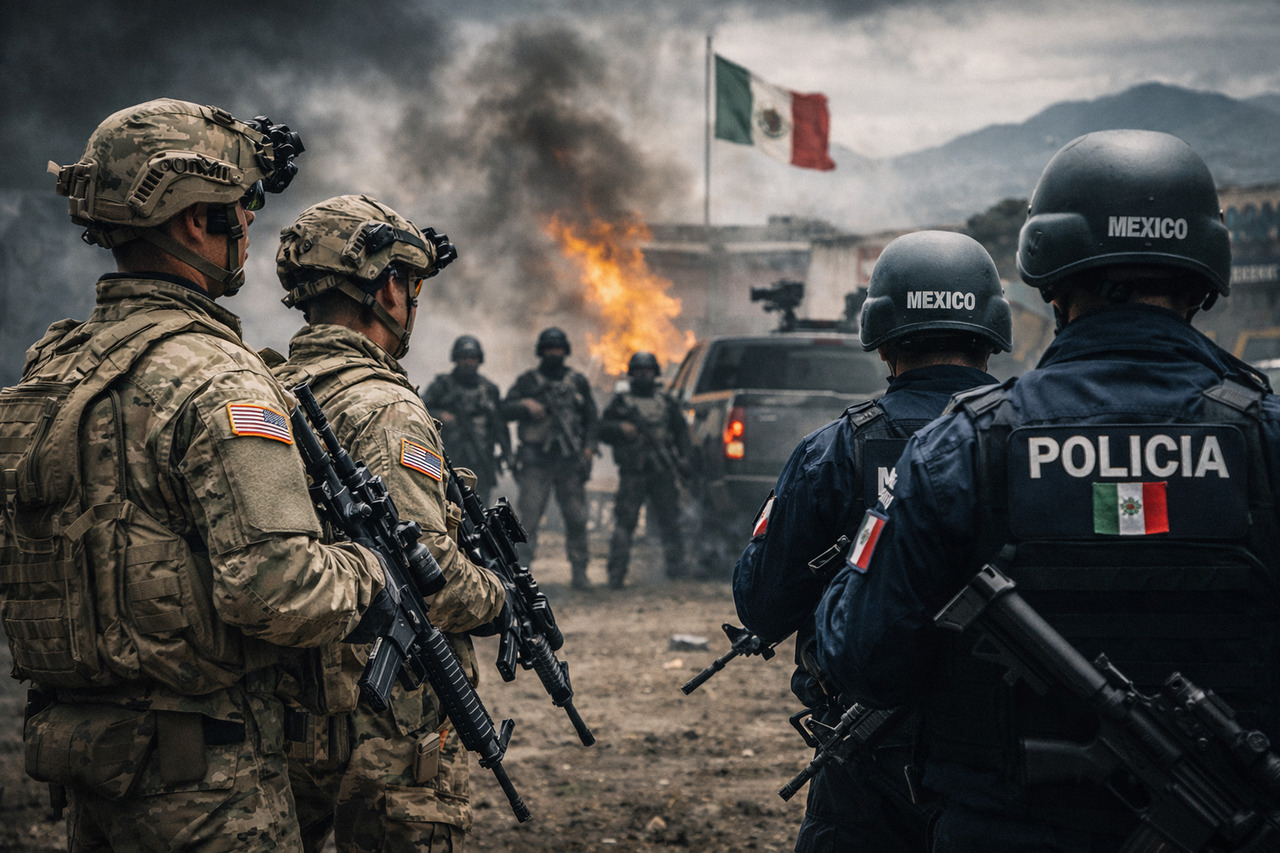
In a startling escalation of U.S. foreign policy, former President Donald Trump suggested that the United States could soon deploy its military against drug cartels in Mexico.
Speaking on Fox News this week, Trump said U.S. forces have already disrupted “about 97%” of drug trafficking by sea and that the next phase of his strategy would involve hitting drug cartels in Mexico with operations “on land” — comments that have galvanized both U.S. and Mexican political leaders and raised questions about national sovereignty and regional stability.
Trump did not provide details about specific plans, legal authority, or timelines. But his declaration represents a dramatic shift from our cooperation with Mexican security forces and escalating to the suggestion of unilateral military action against non-state actors within Mexico’s territory.
“The cartels are running Mexico — it’s very, very sad to watch,” Trump told Sean Hannity. “And we are going to start now hitting land with regard to the cartels.”
Mexico’s President Claudia Sheinbaum responded immediately, emphasizing that any U.S. military incursion would violate Mexican sovereignty.
In a press briefing Friday, she instructed her foreign minister to pursue direct coordination with U.S. authorities to avoid escalation, underscoring that Mexico is committed to joint efforts against organized crime — but not foreign intervention on its soil.
President Claudia Sheinbaum’s full remarks in response to Trump’s suggestion of the U.S. Military taking on the drug cartels in Mexcico

Source: DRM News YouTube channel
Sheinbaum highlighted progress in Mexico’s own security strategy, noting a reported 40 percent drop in homicides since she took office in late 2024 and pointing to recent expulsions of high-level cartel figures as part of ongoing cooperation with Washington.
Nonetheless, she reiterated that “any unilateral military action by the United States would be a grave violation of our nation’s sovereignty.”
Analysts say Trump’s comments reflect frustration with slow progress in combating cartel influence and drug trafficking into the United States. But they also expose deep legal and diplomatic challenges.

Resist Hate gives users honest, fact-based news. The previous statement may have come from a reputable news organization and a well-known, respected political analyst, but that doesn’t make it a “fact.” I have to insert my own commentary here: If Trump truly cared about drugs trafficked into the U.S., he would not have pardoned the former Honduran President, a man who was serving a 45-year sentence for trafficking 400 tons of cocaine into our country. He also wouldn’t have killed the bipartisan border bill that included the funding CBP officers needed to install technology that detects fentanyl coming into the country in vehicles. The equipment had been sitting in a warehouse because Congress never provides the funding required to actually install it.
We have a growing list of every person President Trump pardoned that includes why they were in prison. It’s shocking to see the number of pardons that never made it into the news. List of Criminals Pardoned by Trump so Far This Term

Under international law and long-standing norms of state sovereignty, military action inside another nation’s borders requires explicit consent from that nation or a United Nations mandate — neither of which Mexico has granted. Critics warn that even talk of such operations can strain one of the Western Hemisphere’s most important bilateral relationships.
U.S. lawmakers have expressed mixed reactions. Some Republicans have praised the hardline rhetoric as a bold stand against the flow of fentanyl and other narcotics into American communities. Others, including members of Trump’s own party, have raised concerns that military action without congressional authorization could violate the U.S. Constitution’s war powers provisions.
Meanwhile, diplomatic unease extends beyond Mexico. Just days before these comments, Trump authorized a U.S. military operation inside Venezuela that captured its president, Nicolás Maduro — a move that drew condemnation from multiple Latin American governments and sparked fears in capitals across the region about unchecked U.S. military reach.
For Mexico’s government, the priority now is defusing tensions. Sheinbaum’s administration is pursuing talks with U.S. counterparts to reinforce existing cooperation frameworks against organized crime and drug trafficking without military confrontation. Behind the scenes, some officials are signaling a desire to deepen bilateral security ties to make joint efforts more effective and avoid giving Washington a pretext for independent military moves.
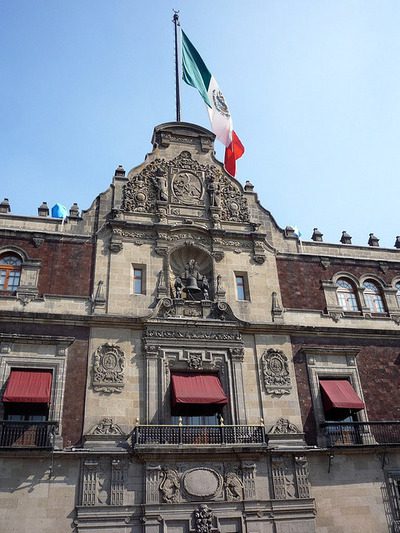
As this story continues to evolve, the next steps will be closely watched by Congress in Washington D.C. and the presidential palace in Mexico City. presidential palace. What remains clear is that regional cooperation — not confrontation — will be essential to tackling entrenched criminal networks in a way that respects the rights of nations and the safety of communities on both sides of the border.